


INORI is a premium makhana supplier from Bihar, specializing in high-quality fox nuts for snack brands, distributors, and bulk buyers. With direct farmer sourcing, strict Sutta-based grading, and a focus on consistency, we deliver reliable, export-re...
- (+91) 8641088078
- contact@inori.co.in
- Bastaul, Pranpur, , Katihar, Bihar, India. 854116
© 2020 INORI. All Rights Reserved
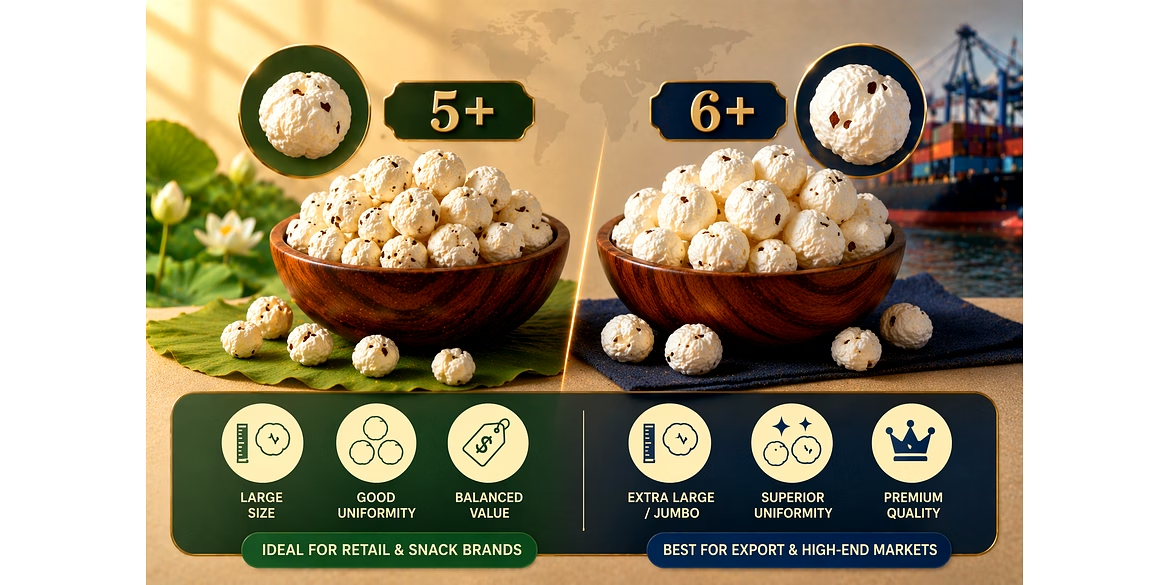

For importers, distributors, wholesalers, and private label snack brands, understanding the difference between 5+ and 6+ makhana is essential for making the right sourcing decision. Both grades are considered premium, but they serve different business needs based on size, appearance, consistency, and pricing. Choosing the right premium makhana grade can influence product quality, shelf appeal, customer satisfaction, and overall brand positioning in domestic and international markets.
Introduction to Premium Makhana Grades
For global buyers, deciding between 5+ and 6+ makhana is not just a quality choice. It is a strategic business decision that affects pricing, product presentation, market fit, and buyer satisfaction. Both grades fall under the premium makhana category and are widely used in retail, snack branding, and export-focused business models. However, the differences in size, uniformity, and premium appeal can significantly change how the product performs in the market.
Understanding these distinctions helps businesses align sourcing decisions with their product goals. Whether the focus is balanced premium value or top-tier export quality, knowing how 5+ and 6+ makhana differ can prevent mismatched expectations and support stronger long-term procurement outcomes.
Businesses comparing premium grades may also benefit from reviewing export quality makhana standards and how to choose makhana grade for broader sourcing guidance.
5+ makhana is a premium-grade fox nut known for its large kernel size, good expansion, and relatively consistent appearance. It is widely used by snack brands, bulk distributors, and wholesalers who want premium makhana quality while still maintaining a workable pricing structure. For many buyers, 5+ makhana offers a strong middle ground between visual quality and commercial affordability.
This grade is commonly selected for mid-to-premium retail segments, branded snack packaging, and bulk supply where appearance matters but the highest premium tier may not be necessary. It is also a popular option for businesses that want to offer a premium product while keeping the cost more controlled than 6+ makhana.
For buyers seeking a balanced combination of premium quality, acceptable consistency, and stronger cost efficiency, 5+ makhana is often a practical and attractive option.
What is 6+ Makhana?
6+ makhana is generally regarded as a superior premium grade, offering larger and more uniform kernels with stronger visual appeal and better batch consistency. It is commonly chosen for high-end retail products, premium snack brands, and export markets where visual quality and consistent product presentation carry greater commercial importance.
Compared with 5+, 6+ makhana typically offers extra-large kernels, better whiteness, more refined appearance, and stronger expansion. These qualities make it especially suitable for businesses targeting premium consumers or international buyers who expect a higher visual standard in packaged snacks and bulk premium supply.
For brands that want to create a more premium perception and justify higher pricing, 6+ makhana often provides a stronger foundation for product differentiation and export-focused positioning.
The main difference between 5+ and 6+ makhana lies in size, uniformity, appearance, texture, and price positioning. While both grades are premium, 6+ is usually considered the more refined option for buyers who place greater importance on top-end presentation and consistency.
In terms of size, 6+ makhana is typically larger than 5+, which can make a visible difference in retail packaging and premium product display. Uniformity is another major factor. 6+ generally offers more consistent kernel sizing across the batch, which improves presentation and reduces variation. In appearance, 6+ is often brighter and more visually appealing, while 5+ remains premium but may show slightly more variation. Texture also differs, with 6+ often offering stronger expansion and a more refined crunch. Because of these added advantages, 6+ makhana is usually priced higher than 5+.
These differences matter because they affect not only product aesthetics but also how the final product is perceived by distributors, retailers, and end consumers.
Comparison Table: 5+ vs 6+ Makhana
| Feature | 5+ Makhana | 6+ Makhana |
| Size | Large | Extra Large / Jumbo |
| Quality Level | Premium | Superior Premium |
| Uniformity | Good | Excellent |
| Appearance | White / Cream | Brighter White |
| Texture | Crunchy | Better Expansion and Crunch |
| Use Case | Retail and Snacks | Export and Premium Brands |
| Price | Moderate Premium | High Premium |
For international and export-focused buyers, 6+ makhana is generally the stronger option because of its superior appearance, more consistent batch quality, and premium positioning. In export markets, these factors can significantly influence retail shelf appeal, consumer perception, and the ability to position the product as a top-tier healthy snack.
That said, 5+ makhana can still be a very strong export-grade choice, especially for buyers targeting premium segments with more cost sensitivity. It works well where businesses want a high-quality premium product but also need better control over landed cost and pricing competitiveness. In this sense, the better export grade depends on whether the buyer is aiming for top-end premium placement or a balanced premium value proposition.
For high-end international retail and premium packaging, 6+ often has the advantage. For broader premium distribution with more pricing flexibility, 5+ can be a smart commercial option.
Choosing the Right Grade for Your Business
Selecting between 5+ and 6+ makhana depends on your product strategy, customer expectations, and margin goals. If your business is focused on maintaining a strong balance between cost and premium quality, 5+ makhana can deliver very good commercial value. It is especially suitable for retail snacks, bulk premium supply, and branded products that do not require the very highest visual standard.
If your focus is premium branding, export presentation, or positioning your product at the top end of the market, 6+ makhana is often the better choice. Its stronger uniformity and premium look help justify higher pricing and can create a more elevated consumer experience. Buyers should also consider how their target audience views product appearance, whether the business needs strong visual differentiation, and how much pricing flexibility exists within the business model.
The right choice is ultimately the one that best aligns with your market segment, branding goals, and expected product performance.
Understanding the difference between 5+ and 6+ makhana helps global buyers make more accurate sourcing decisions and avoid product-market mismatches. A buyer who chooses a grade without understanding its commercial implications may face quality complaints, weaker retail performance, or difficulty maintaining expected brand standards.
Clear grade knowledge supports better product sourcing, stronger supplier communication, and improved customer satisfaction. It also helps businesses develop more reliable long-term supplier relationships because expectations around size, quality, and pricing are better aligned from the start. For buyers operating across different markets or multiple product lines, this understanding becomes even more important.
When businesses understand how premium grades differ, they can make more confident sourcing decisions and improve the consistency of their final offering.
Conclusion: 5+ vs 6+ – Making the Right Choice
Both 5+ and 6+ makhana are premium-quality grades, but they support different business needs. 5+ offers strong value, large kernel size, and broad versatility for premium retail and snack products. 6+ provides a higher level of quality, larger and more uniform kernels, and stronger visual appeal for export markets and premium branding.
Choosing the right grade means aligning product quality with your pricing strategy, market segment, and brand goals. Businesses looking to refine premium sourcing decisions may also benefit from exploring premium makhana sourcing and bulk makhana for export buyers for additional guidance.
Q1. What is the main difference between 5+ and 6+ makhana?
The main difference is size, uniformity, appearance, and overall premium quality, with 6+ generally positioned as the more superior grade.
Q2. Which makhana grade is better for export?
6+ makhana is usually preferred for export because of its larger size, stronger consistency, and better premium appearance.
Q3. Is 5+ makhana suitable for retail products?
Yes, 5+ makhana is widely used for retail snacks and mid-to-premium packaged products because it balances quality and pricing well.
Q4. Why is 6+ makhana more expensive?
6+ makhana is more expensive because it offers extra-large size, better uniformity, stronger visual appeal, and a more premium overall product standard.
Q5. Can 5+ makhana be used for premium brands?
Yes, 5+ makhana can work very well for premium brands, especially those seeking a balance between premium quality and cost efficiency.
Q6. Which grade has better texture?
6+ makhana typically offers better expansion and crunch, making it more suitable for top-end premium applications.
Q7. How should I choose between 5+ and 6+ makhana?
Choose based on your target market, product positioning, margin goals, and the level of premium appearance your business requires.