


INORI is a premium makhana supplier from Bihar, specializing in high-quality fox nuts for snack brands, distributors, and bulk buyers. With direct farmer sourcing, strict Sutta-based grading, and a focus on consistency, we deliver reliable, export-re...
- (+91) 8641088078
- contact@inori.co.in
- Bastaul, Pranpur, , Katihar, Bihar, India. 854116
© 2020 INORI. All Rights Reserved
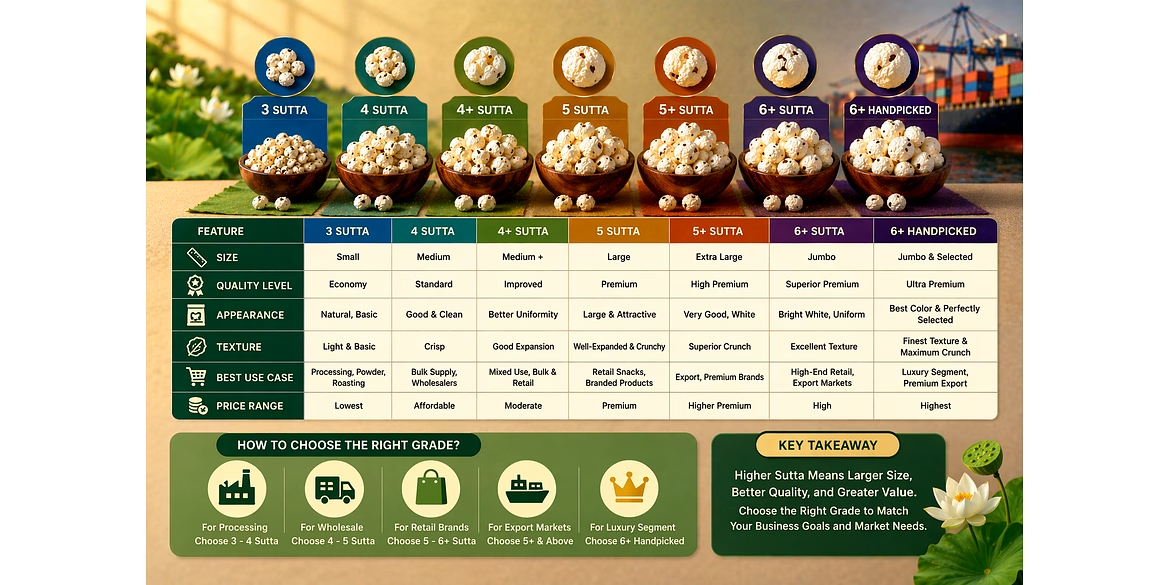

Makhana Grades Explained: 3 Sutta vs 4 vs 5 vs 6+ (Buyer Guide)
For importers, wholesalers, distributors, and snack brands, understanding makhana grades is essential for choosing the right product quality, pricing level, and market fit. The makhana grading system, commonly referred to as the Sutta system, helps buyers compare fox nuts based on kernel size, appearance, expansion, and overall premium value. A clear understanding of makhana grades can improve sourcing decisions, support product consistency, and help businesses match the right quality with the right business application.
Introduction to Makhana Grading System
Makhana grading plays an important role for businesses that want to source the right quality of fox nuts for processing, wholesale, retail, or export. The grading system, known widely as the Sutta system, classifies makhana according to size, appearance, and overall quality. This helps buyers understand how one grade differs from another and how each grade fits a specific commercial need.
For global buyers, understanding makhana grades leads to better procurement decisions, more predictable product performance, and stronger alignment with target market expectations. Higher Sutta grades are generally associated with larger and more premium makhana, while lower grades are more suitable for processing and value-driven supply. Each grade has a different commercial role, which makes the grading system essential for pricing and product positioning.
Businesses evaluating sourcing options may also benefit from exploring how to choose makhana grade and export quality makhana standards for additional procurement insight.
The term “Sutta” is commonly used in the makhana industry to define the grading category of fox nuts based on kernel size and quality. It acts as a standard reference for buyers and suppliers, helping create more uniform expectations across bulk orders and repeat shipments. In simple terms, lower Sutta indicates smaller-sized makhana that usually sells at a lower price, while higher Sutta refers to larger and more premium kernels.
The Sutta system is valuable because it gives buyers a practical way to compare product levels before making a commercial decision. It also helps support batch uniformity, which is especially important for export markets, retail presentation, and branded snack products where appearance and consistency matter more.
For wholesalers and international buyers, understanding what Sutta means is the first step toward selecting the right makhana grade for their product line and market segment.
Overview of Makhana Grades (3 to 6+)
Makhana is typically classified into several grades based on size, expansion, appearance, and overall quality. Each grade is designed for a different commercial purpose, which is why buyers should understand not only the grade names but also the business use case behind each one.
At the lower end, 3 Sutta represents small-size, economy-grade makhana mainly used for processing. 4 Sutta is considered a standard commercial grade, while 4+ Sutta provides somewhat improved size and consistency. 5 Sutta is widely recognized as a premium retail-grade makhana and is popular among snack manufacturers. 5+ Sutta and 6+ Sutta move into high-end premium territory, offering larger and more uniform kernels. At the very top, 6+ handpicked makhana represents a carefully selected ultra-premium quality level designed for luxury and export-oriented use.
This progression in grade reflects both rising product quality and stronger premium market suitability.
3 Sutta makhana is generally considered the most economical grade in the makhana grading system. It consists of smaller kernels and is commonly used in industrial, ingredient-based, and processing applications where visual appearance is less important than functionality and cost efficiency.
Because of its smaller size, 3 Sutta makhana is suitable for powder production, roasting, blending, and bulk processing applications. It is often chosen by businesses that need large-scale supply at a lower price point and do not require premium shelf appeal. For such buyers, this grade can provide strong commercial value.
Although it is not ideal for premium retail packaging, 3 Sutta makhana is still a useful and important grade for businesses focused on processing efficiency and controlled raw material cost.
4 and 4+ Sutta Makhana – Standard Commercial Grades
4 Sutta and 4+ Sutta makhana are commonly seen as standard commercial grades that offer a balance between affordability and improved product quality. These grades are often used by wholesalers, bulk suppliers, and mid-range buyers who need dependable product quality without paying for top-tier premium size.
4 Sutta typically offers medium-sized kernels and is well suited for bulk supply, wholesale distribution, and more practical commercial applications. 4+ Sutta provides a step up in size and consistency, making it useful for businesses that need a better-looking lot while still maintaining price discipline. These grades can be used across both processing and some retail-oriented applications depending on the product strategy.
For businesses looking for versatile makhana grades that bridge the gap between economy and premium, 4 and 4+ Sutta often represent a practical sourcing option.
5 Sutta makhana is one of the most widely preferred grades for branded retail products and snack manufacturing. It is considered a premium retail-grade makhana because it offers larger, better-expanded kernels with stronger visual appeal and more consistent pack presentation. For many snack businesses, this grade provides the right balance between quality and cost.
Its larger size and better appearance make it especially suitable for packaged snack products, premium wholesale offerings, and consumer-facing retail formats. Snack manufacturers often prefer 5 Sutta because it supports stronger shelf appeal while still remaining commercially manageable compared with higher premium grades.
For businesses targeting premium retail without moving fully into export-jumbo grade territory, 5 Sutta is often a very strong and dependable choice.
5+ and 6+ Makhana – High-End Premium Grades
5+ and 6+ makhana are high-end premium grades designed for export markets, premium snack brands, and businesses that need stronger product differentiation. These grades typically feature extra-large and more uniform kernels, better whiteness, refined texture, and stronger visual appeal compared with lower grades.
5+ makhana is often chosen by buyers who want a premium product with large kernels and good consistency while keeping pricing somewhat more flexible. 6+ makhana usually represents a higher premium level, with jumbo kernels, stronger uniformity, and more luxurious pack presentation. These qualities make both grades attractive for premium packaging, export-focused snack lines, and high-end distribution channels.
For businesses competing on premium quality and market perception, 5+ and 6+ makhana can play a major role in brand positioning and customer experience.
6+ handpicked makhana is generally regarded as the highest available grade in the makhana market. It is manually selected to achieve maximum consistency, appearance, size, and overall premium quality. This makes it particularly attractive for luxury retail products, very high-end export supply, and businesses targeting top-tier premium consumers.
Because it is handpicked, this grade offers a superior level of selection compared with standard premium lots. Buyers can expect excellent kernel size, a more refined look, and a stronger sense of exclusivity. These qualities place 6+ handpicked makhana in the highest price segment of the market, but they also support the strongest premium positioning.
For brands pursuing a luxury offering or export buyers seeking top-grade fox nuts, 6+ handpicked makhana represents the ultra-premium end of the category.
Comparison Table: Makhana Grades
| Grade | Size | Quality Level | Best Use Case |
| 3 Sutta | Small | Economy | Processing, Powder |
| 4 Sutta | Medium | Standard | Bulk Supply |
| 4+ Sutta | Medium+ | Improved | Mixed Use |
| 5 Sutta | Large | Premium | Retail Snacks |
| 5+ Sutta | Extra Large | High Premium | Export and Premium Brands |
| 6+ Sutta | Jumbo | Superior | High-End Retail |
| 6+ Handpicked | Jumbo+ | Ultra Premium | Luxury and Export Markets |
Selecting the right makhana grade depends on your business model, target market, and pricing strategy. Buyers should always match the grade to the intended commercial use rather than simply choosing the cheapest or highest grade available. The right decision comes from understanding what level of size, appearance, and consistency the final product actually requires.
For processing industries, 3 to 4 Sutta grades are often the most practical because they provide cost efficiency without unnecessary premium features. Wholesale distribution commonly works well with 4 to 5 Sutta, depending on the mix of value and quality needed. Retail snack brands usually prefer 5 to 6+ Sutta because better visual quality matters more for packaged products. Export markets often focus on 5+ and above, while luxury and top-end premium segments may specifically require 6+ handpicked makhana.
Choosing based on business use case helps improve product-market fit and supports stronger commercial performance.
Why Makhana Grading Matters for Global Buyers
For international buyers, makhana grading directly influences product quality, consistency, pricing strategy, and brand positioning. A buyer who understands the grading system can source more accurately, set better quality expectations, and reduce the risk of dissatisfaction after delivery. This is particularly important in export markets where appearance and uniformity can affect retail acceptance and brand perception.
Clear grading knowledge also supports better supplier communication and more stable repeat orders. It helps businesses reduce rejection risk, maintain product consistency, and differentiate themselves more effectively in premium and competitive snack markets.
For importers, distributors, and snack brands, grading is not just a technical detail. It is a key commercial tool for building a more reliable makhana sourcing strategy.
Understanding makhana grades is essential for making informed and profitable sourcing decisions. From 3 Sutta economy grade to 6+ handpicked ultra-premium quality, each grade serves a different purpose in the market and supports a different type of business strategy.
Whether you are a wholesaler, importer, distributor, or snack brand, selecting the right Sutta grade can improve product performance, customer satisfaction, and long-term business success. Businesses comparing premium options may also benefit from reviewing 5+ vs 6+ makhana differences and bulk makhana sourcing guide for added decision-making support.
FAQ: Makhana Grades Explained
Q1. What does Sutta mean in makhana?
Sutta refers to the size and quality grading system used for makhana kernels in the fox nut trade.
Q2. Which makhana grade is best for export?
5+ and 6+ grades are typically preferred for export markets because they offer larger size, better consistency, and stronger premium appearance.
Q3. What is the difference between 5 Sutta and 6+ Sutta?
6+ Sutta is generally larger, more uniform, and more premium in appearance than 5 Sutta, which is already considered a strong retail-grade option.
Q4. Which grade is suitable for snack brands?
5 Sutta and above are usually ideal for snack brands because they provide better size, shelf appeal, and premium retail presentation.
Q5. Is 3 Sutta makhana good quality?
Yes, 3 Sutta makhana can still be good quality for its intended purpose, especially in processing and ingredient-based applications rather than premium retail.
Q6. Why are higher Sutta grades more expensive?
Higher Sutta grades are more expensive because they offer larger size, better appearance, improved consistency, and stronger demand in premium markets.
Q7. How do I choose the right makhana grade?
Choose the grade based on your business use case, whether that is processing, wholesale, retail, export, or premium branding.